Letter J Preschool Printable Worksheets
All printables for personal or classroom use only.
These letter of the week printables are great for tot school, preschool, and kindergarten children. Children can work on one letter activity each day.
Click on the picture to download the printable.
See the entire Letter of the Week curriculum.

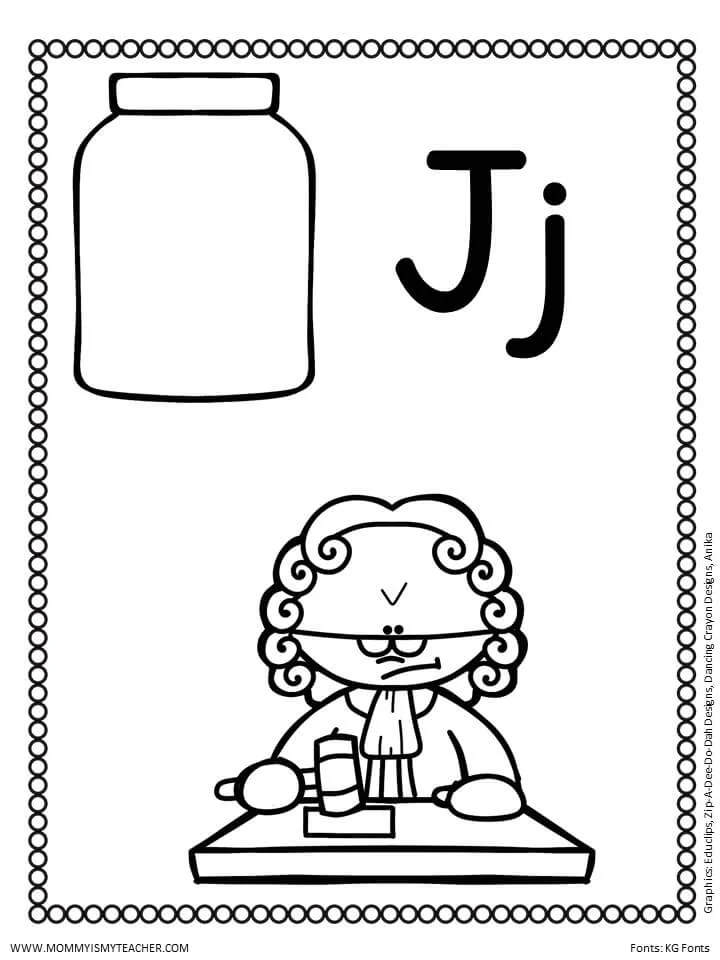
Blank uppercase letter- great for crafts, painting or decorating.

Blank lowercase letter- great for crafts, painting, or decorating.

LETTER J UPPERCASE TRACING WORKSHEET-
Trace the uppercase letter J.
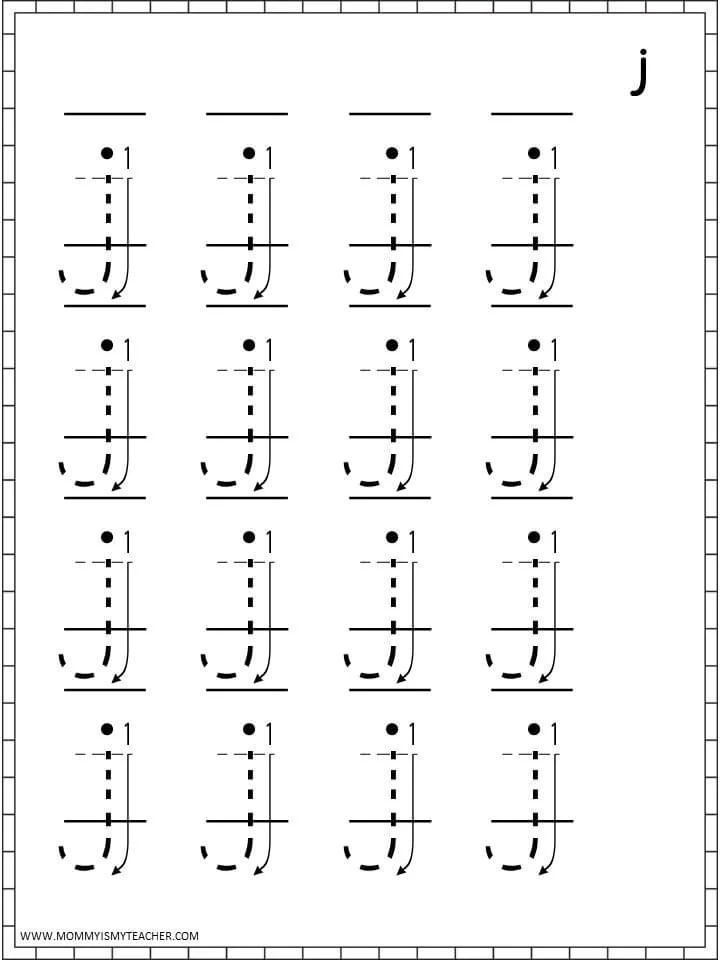
LETTER J LOWERCASE TRACING WORKSHEET-
Trace the lowercase letter j.
Color the objects that start with the letter.
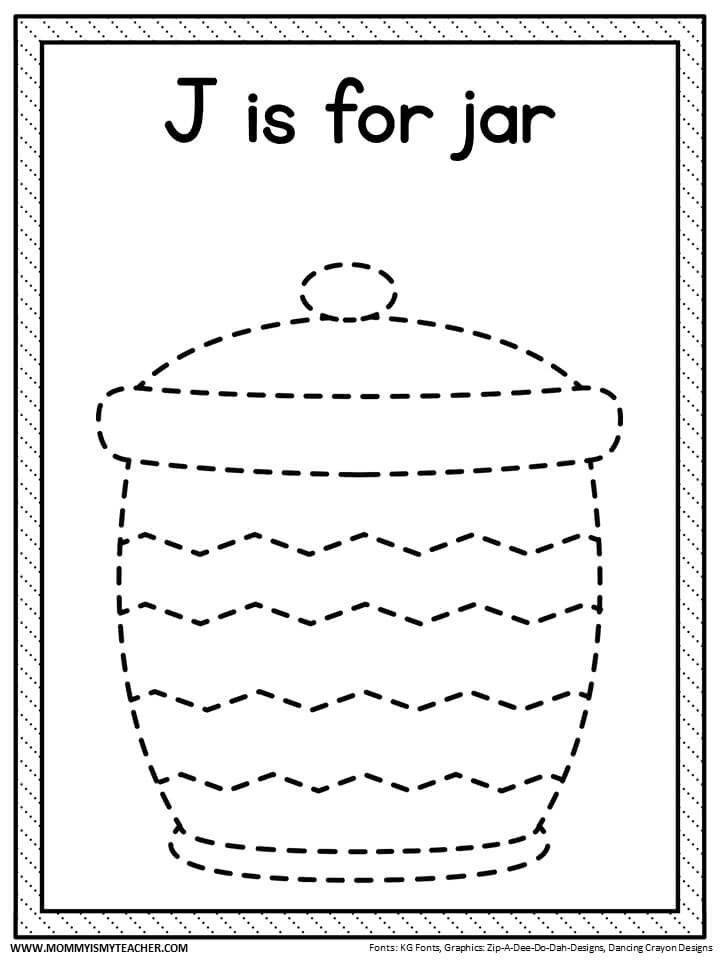
Letter J Worksheet
Trace and color the letter J printable worksheet.
How to Teach the Letter J
J is a happy letter to teach. Kids love the bouncy /j/ sound, and the list of J words is full of things they already enjoy, like jelly, jumping, and juice. These are the steps I use with the letter J worksheets on this page.
1. Start with the sound. J says /j/ as in jam. Your child's lips push forward a little, and the sound has a buzz, so a hand on the throat will pick it up. Try saying "j, j, jump" while hopping on each one. Moving while they say it helps the sound stick.
2. Show how J is written. Capital J is easy: a straight line down with a hook at the bottom that curves to the left. Lowercase j has the same line and hook, but it dips below the bottom line, and a dot goes on top at the end. Let your child practice big first, on a cookie sheet of salt, in the air, or with a paintbrush and water outside.
3. Build the sound into words. Gather a few J things from around the house, such as a jar, a jacket, or a jump rope, and say each name together. A bowl of jelly beans works well for a taste of the sound too. Other good J words for this age are jet, jeans, juice, jellyfish, and jungle.
4. Catch the usual slip-ups. Many kids write J facing the wrong way, so draw a small arrow to show the hook goes left. Lowercase j gets confused with i because both have a dot. The difference is the tail: j drops below the line and i stays put.
The J tracing sheets, coloring pages, and beginning sounds worksheets on this page cover each of these steps.
Frequently Asked Questions About the Letter J
When do kids usually learn the letter J?
Somewhere around age 4 for most children, though it varies. Capital J is a simple shape, so some three-year-olds can trace it. Lowercase j takes more control because of the tail and dot, so it often comes a little later.
What sound does the letter J make?
J makes the /j/ sound, the one you hear at the start of jam, jump, and jar. It's a voiced sound, so your child should feel a slight buzz in their throat. J has just this one sound in English, which makes it easier than letters like C and G.
What words start with the letter J?
Good beginner choices are jam, jar, jet, jump, jelly, juice, jacket, jeans, jellyfish, jungle, and jigsaw. Start with the ones your child sees or uses every day, like juice and jacket, then add the rest.
Why does my child write J backwards?
It's one of the most common reversals, and it usually fades with time. Your child isn't doing anything wrong. It helps to point out that the hook always turns toward the left. Practicing in a salt tray or on a big whiteboard gives them room to feel the curve.
How can my child tell lowercase j from i?
Both letters have a dot, so it comes down to the tail. A j reaches down below the line, like it's dipping a toe in water. An i sits right on the line. Trace both letters together and have your child point to the one with the tail.
What are some easy ways to practice the letter J at home?
Play with jumping games, like seeing who can jump the farthest while saying a J word. Make a jelly bean sorting game, build a jigsaw puzzle together, or have your child write a J on a jar label. Short, playful practice is enough at this age.
Where should we start on the letter J worksheets?
Tracing first, because the hook is the trickiest part of this letter. Then try the beginning sounds page to check whether your child can hear /j/ at the start of words. Coloring pages are good for days when your child's attention is running low.